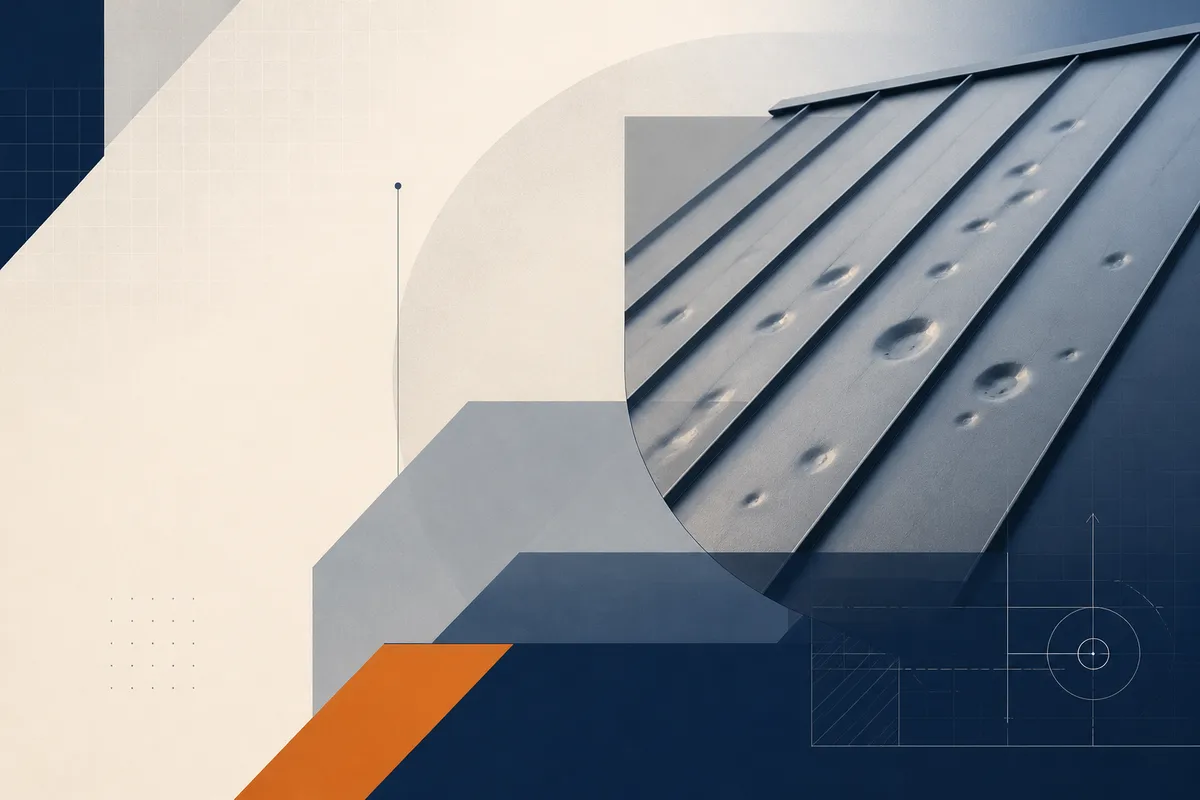
How to Properly Document a Metal Roof Hail Damage Claim
In San Antonio, a hailstorm can dent a standing seam roof without causing an immediate leak, leading many adjusters to categorize the impact as purely cosmetic. This distinction is the primary friction point in insurance recovery; if a policy contains a cosmetic wave exclusion, the carrier may refuse to pay unless you can prove the impact shortened the roof's service life.
Documenting damage to metal systems requires a different technical lens than shingle roofs. You aren't looking for missing granules, but for displaced finishes and structural "dimpling" that leads to rust or fastener fatigue. This guide outlines how to build a documentation package that survives the scrutiny of a desk adjuster.
Why Metal Roof Claims Often Face Initial Denial
Metal is inherently resilient, which leads to a common industry bias that these systems are "indestructible" by mid-sized hail. When a claim fails, it is usually because the documentation focused on the wrong indicators.
- Adjusters often cite the lack of active leaks as proof that no functional damage occurred.
- Cosmetic exclusions in modern policies allow carriers to ignore dents that do not "break the surface" of the metal.
- Overlooking the "soft metals" like flashing and ridge caps results in an incomplete picture of the storm’s intensity.
- Failure to identify fractures in the protective Kynar or SMP coatings leads to long-term corrosion that insurance won't cover later.
The Playbook for Documenting Metal Damage
Building a bulletproof file requires moving beyond wide-angle shots. You must demonstrate that the hail impact was severe enough to alter the physical properties of the metal.
1Establish the Date of Loss
Insurance carriers require a specific date to correlate with weather radar data. Use local storm reports or NOAA data to pinpoint the exact window when the hail hit. Without a confirmed date of loss, the carrier may argue the damage is wear and tear or from a previous event outside the policy period.
2Capture the "Collateral Damage" first
Before climbing onto the roof, photograph the soft metals at ground level. Look for dents in downspouts, window screens, and air conditioning fins. According to Premier Claims, these softer materials serve as the "litmus test" for adjusters to verify that hail of a certain size actually fell on the property.
3Use Side-Lighting for Surface Dents
Direct sunlight flattens the appearance of dents on a reflective metal surface, making them invisible in photos. The most effective way to document roof storm damage is to ask for clear documentation including photos, notes, and written explanations of visible damage, often captured during the "golden hour" or by using a high-powered flashlight held at an angle across the panel. This creates shadows within the dimples, clearly defining the depth and frequency of the strikes.
4Identify Coating Fractures
A dent is often considered functional damage if the impact was hard enough to crack the paint or protective zinc coating. Use a macro lens to get close-up shots of the impact site. If the coating is compromised, the steel underneath is now vulnerable to moisture and rust, which Sheffield Metals notes can eventually lead to premature failure of the system.
5Inspect the Fasteners and Seams
On exposed fastener roofs (R-panels), hail can strike the rubber grommets or the screw heads themselves. Document any backed-out fasteners or distorted seams. If the impact has compromised the seal where two panels meet, the roof's ability to handle thermal expansion is limited, even if it isn't leaking into the attic yet.
The Reality of Cosmetic vs. Functional Damage
The debate over "cosmetic" damage is the most litigated aspect of metal roofing insurance. Many policies now include specific endorsements that exclude coverage for dents, marring, or pitting that does not result in a perforation of the metal or a failure of the water-shedding capabilities. However, if the hail impact is severe enough to cause "dimpling" that allows water to pool or disrupts the flow of debris, it may move from cosmetic to functional.
Property owners should be aware that some insurance companies may include waivers that homeowners unknowingly sign in exchange for lower premiums. These waivers can make it nearly impossible to claim damage for anything short of a total puncture. Verification of the specific policy language regarding "Appearance Loss" is a mandatory step before filing the claim.
How Escarpment Metal Roofing helps
When a storm impacts a property, the standard procedure involves a comprehensive technical assessment to determine the scope of metal roof repair required. This process typically includes a moisture scan and a fastener integrity check to ensure the structural substrate remains dry. A detailed report for a claim should include high-resolution imagery, a map of the impact density per square, and a list of all compromised components from ridge caps to valley flashing. Property owners can call (726) 240-8157 to schedule a professional evaluation or request a formal inspection report through the online portal.
Frequently asked questions
Will my insurance pay for a full replacement if the roof isn't leaking?
Insurance coverage depends heavily on whether the hail caused "functional damage," such as cracking the protective coating or denting the seams. If the damage is purely aesthetic and your policy has a cosmetic exclusion, the carrier may deny a full replacement. However, if the strikes have compromised the metal's integrity or the fasteners, a claim for replacement is more likely to be approved.
How do I know if the hail was large enough to damage my metal roof?
Generally, hail smaller than one inch is unlikely to cause structural damage to heavy-gauge steel, though it can damage softer components like aluminum vents. Larger hail stones frequently cause significant dimpling and can fracture the finish on standing seam panels. Documentation of damaged "soft metals" around the property is often the best evidence of hail size.
What should I do if the adjuster says the damage is only cosmetic?
If a claim is denied as "cosmetic," you should review your policy for a Cosmetic Loss Exclusion. If no such exclusion exists, you may need a second opinion from a professional who can identify visible fractures in the paint or metal. In some cases, property owners may choose to involve a public adjuster or legal counsel if the damage is structural but being mischaracterized by the carrier.
Can hail damage lead to rust on my metal roof?
Yes, if the hail impact is forceful enough to crack the protective paint or the underlying galvalume/galvanized coating, the raw steel becomes exposed to the elements. Over time, humidity and rain will cause these impact points to oxidize and rust. Documenting these fractures early is critical because insurance companies rarely cover rust that develops years after a storm event has passed.
How long do I have to file a metal roof hail damage claim in Texas?
Homeowners should review their specific policy to determine the exact deadline for filing a claim following a date of loss. Because metal damage can be subtle and may not result in a leak for several seasons, it is vital to have the roof inspected immediately following any significant hail event. Waiting until a leak occurs often results in the claim being denied due to "late reporting."
What happens when you get in touch: you describe the situation, we ask the few questions that actually change the answer, and you get a clear scope and next step — no obligation.