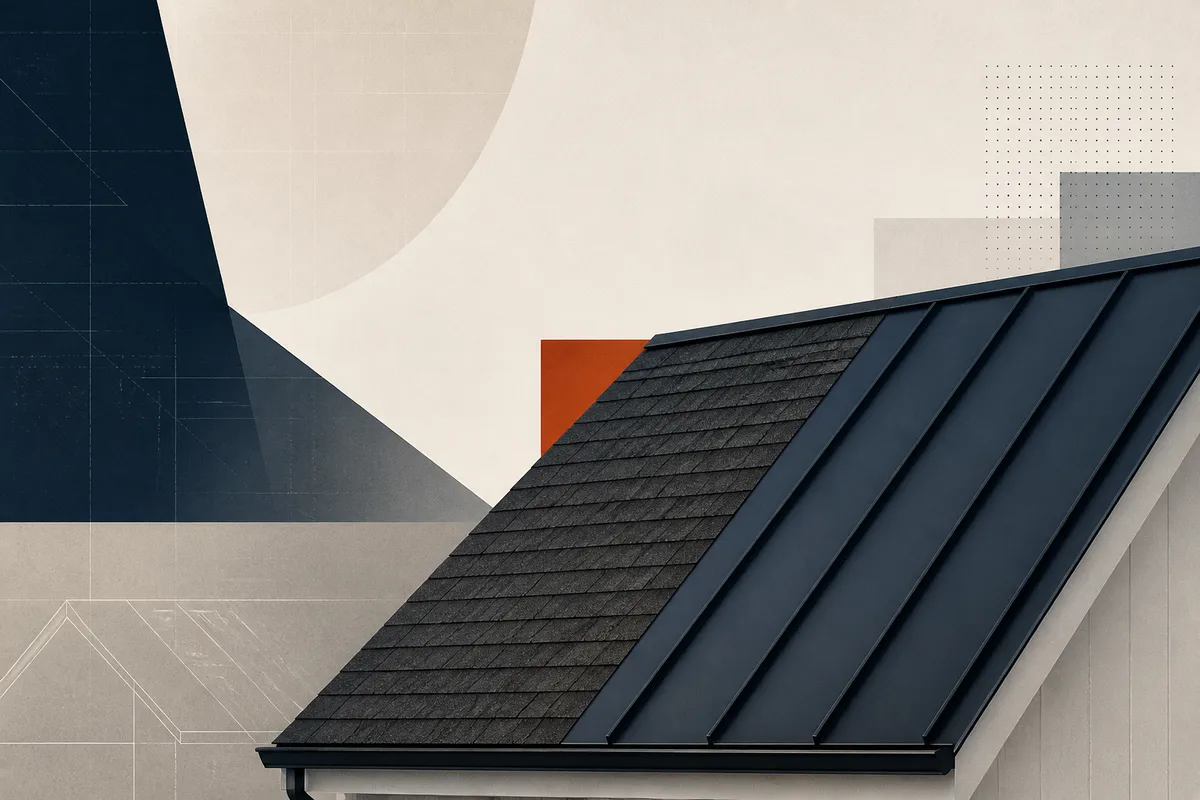
Managing the Visual Transition from Asphalt Shingles to Standing Seam Metal
Homeowners switching from asphalt shingles to metal roofing often expect a glass-smooth surface, but the physics of thin-gauge steel often results in a visual phenomenon known as oil canning. While shingles use heavy granules and overlapping layers to mask uneven roof decking, standing seam panels are flat, reflective surfaces that amplify every dip and hump in the wood structure beneath them.
This guide details how to navigate a shingle-to-metal conversion without falling victim to common aesthetic pitfalls. It covers the structural requirements for a level deck, the trade-offs between different panel profiles, and how environmental factors in Central Texas influence the final look of the installation.
Why Shingle-to-Metal Conversions Often Reveal Visual Defects
The transition fails to meet aesthetic expectations when the installer treats the metal panel as a decorative skin rather than a structural component sensitive to light and heat. Understanding the "why" behind visual distortion is the first step in preventing oil canning in standing seam metal roofs.
- Asphalt shingles are thicker than metal panels and highly textured, allowing them to absorb the visual impact of warped plywood or inconsistent rafter heights.
- Metal panels are typically 24 or 26 gauge steel; they are thin enough to telegraph the exact shape of the substrate they are fastened to.
- High solar gain in San Antonio causes metal to expand, and if the panels are restricted by over-tightened fasteners or uneven decking, they will bow outward.
- The high reflectivity of metal finishes creates a visual effect where even minor deviations in the substrate create noticeable shadows or waves.
The Playbook for a Smooth Metal Transition
Achieving a high-end look requires moving beyond basic installation and focusing on substrate preparation and panel geometry. Follow these steps to ensure the structural deck is ready for a reflective finish.
1Execute a Total Tear-Off and Deck Inspection
Never install metal panels directly over existing shingles or skip the inspection of the original decking. Removing the old material allows for the identification of "crowning" rafters or sagging plywood sheets that must be replaced or shimmed. A flat metal roof requires a deck that is "in plane," meaning there are no abrupt changes in height between neighboring rafters.
2Prioritize Striated or Ribbed Profiles
If a perfectly flat aesthetic is the goal, consider striated or textured panels. Striations—small longitudinal ribs rolled into the center of the panel—provide structural rigidity and help in the reduced appearance of oil canning by breaking up light reflections. This makes minor surface distortions less visible to the eye compared to flat-pan designs.
3Implement Proper Fastening for Thermal Movement
Metal expands and contracts significantly throughout the day. In the San Antonio area, where the barometer may sit at 30.00 in and temperatures shift rapidly, panels must be allowed to move. Avoiding the over-driving of fasteners is critical, as fasteners installed too tightly trap the metal and cause it to buckle when it needs to expand.
4Level the Substrate with High-Temp Underlayment
After the deck is cleared, installers should use a thick, high-temperature self-adhering underlayment. This provides a secondary moisture barrier and acts as a slight cushion, helping to dampen the "telegraphing" of minor wood grain patterns or small gaps in the plywood into the metal surface.
The Mechanics of Structural Telegraphing
The core challenge of a shingle-to-metal conversion is that the wood beneath the roof is rarely as straight as the steel on top of it. In older homes across Bexar County, the underlying geology—documented in Texas Soil Surveys—can lead to foundation shifts that translate into uneven roof ridges and valleys over decades.
When a flat standing seam metal roof is clamped onto an uneven ridge, the metal is forced to follow a curve it wasn't designed for. This introduces "stress wrinkling." To solve this, a contractor must often sister new rafters to old ones or use shims to create a flat plane. Without this leveling, the most expensive 24-gauge steel will still look wavy under the midday sun.
How Escarpment Metal Roofing helps
Managing a shingle-to-metal conversion requires a detailed scope of work that accounts for the removal of all previous roofing layers and a systematic leveling of the deck. A standard professional approach involves a multi-point inspection of the rafters to identify deviations in the plane of the roof. When preparing for a project in San Antonio, property owners should request a specific plan for fastener spacing and thermal expansion joints to ensure the long-term visual integrity of the standing seam system.
Frequently asked questions
Does oil canning affect the lifespan of the roof?
No, oil canning is typically an aesthetic issue, not a structural one. It does not compromise the waterproofing capabilities or the wind resistance of the steel panels. However, extreme buckling caused by a lack of thermal expansion room can eventually lead to fastener fatigue over several decades.
Can I fix oil canning after the roof is installed?
It is extremely difficult to fix oil canning once the panels are locked in place. In some cases, loosening the ridge caps or perimeter flashings can relieve some tension, but if the waviness is caused by an uneven deck, the only real fix is to remove the panels and level the substrate.
Why does my roof look wavy only at certain times of the day?
This is due to the angle of the sun. When the sun is directly overhead, shadows are minimized, and the roof may look flat. In the early morning or late afternoon, the low angle of light hits the "waves" in the metal and casts long shadows, making any minor oil canning appear much more dramatic.
Is thicker metal better for preventing oil canning?
Generally, yes. 24-gauge steel is stiffer than 26-gauge steel and is less prone to oil canning. While the initial material cost is higher, the increased rigidity helps the panels maintain their shape across longer spans between rafters.
Are there specific colors that hide oil canning better?
Lighter colors and matte finishes are much better at hiding visual defects than dark, high-gloss colors. In San Antonio, where high humidity and bright sun are common, a light grey or tan matte finish can significantly reduce the visibility of any surface waves compared to a gloss black or dark bronze.
What happens when you get in touch: you describe the situation, we ask the few questions that actually change the answer, and you get a clear scope and next step — no obligation.