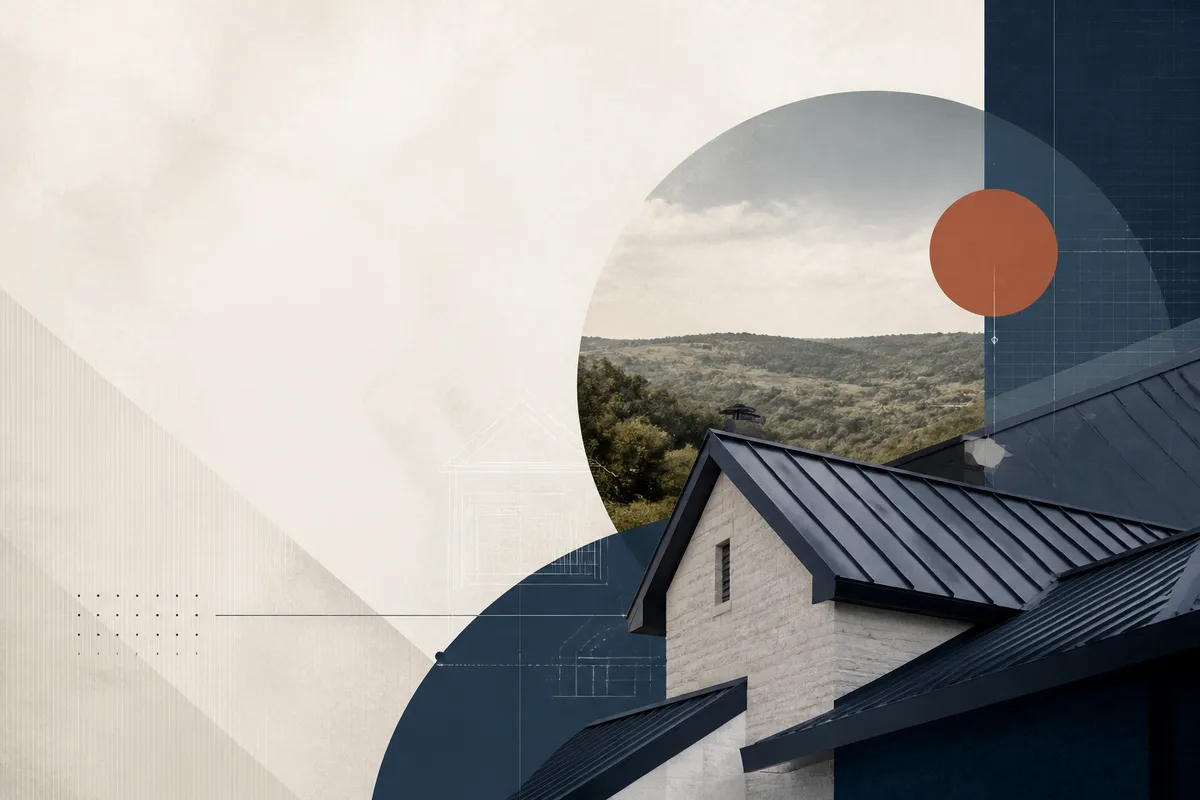
Navigating HOA Approval for Metal Roofing in San Antonio and the Hill Country
Homeowners in hail-prone corridors of Bexar County often find themselves trapped between deteriorating asphalt shingles and rigid Architectural Review Committees. While a metal roof offers superior longevity, many HOAs still view metal through an industrial lens, fearing that standing seam panels will disrupt the Mediterranean or Traditional aesthetic of the community.
The friction point isn't usually the material itself, but a lack of technical specificity in the application. Approval is rarely granted to those who ask for "a metal roof" generally; it is granted to those who present a specific architectural solution that aligns with local deed restrictions. This guide outlines the regulatory landscape and the steps required to secure an approval for metal roofing.
Why Metal Roof Applications Typically Stall
Most HOA rejections are the result of poor communication rather than strict legal prohibitions. When a homeowner fails to bridge the gap between utility and aesthetics, the board defaults to the safest option: the status quo.
- Over-reliance on industrial-grade finishes that produce high glare, violating "nuisance" or "reflective" clauses in the bylaws.
- Failure to distinguish between agricultural R-panels and residential standing seam systems during the initial presentation.
- Submitting low-resolution digital color swatches that do not accurately represent how the roof will look under the sun.
- Ignoring the specific Texas Property Code protections that prevent HOAs from banning certain energy-efficient materials.
The Strategy for Neighborhood Approval
Navigating the HOA metal roofing requirements requires a practitioner's approach to the Architectural Review Committee (ARC) process.
1Leverage Texas Property Code
Texas law provides protections for homeowners seeking energy-efficient or wind-resistant upgrades. According to Texas HOA roofing rules, an association generally cannot prohibit a property owner from installing shingles that are wind and hail resistant or provide heating/cooling efficiencies, provided they match the neighborhood’s aesthetics. Use this legal framework as the foundation of your request rather than a point of conflict.
2Propose Matte Finishes
To overcome the "industrial" stigma, specify high-performance coatings that offer a matte appearance. This helps reduce the glare that boards often cite as a reason for denial. Choosing finishes that mimic the look of traditional materials can often lead to smoother approval in communities with strict visual guidelines.
3Match the Architectural Silhouette
In master-planned communities, the "form" of the roof is often more important to the board than the material. If standing seam is a non-starter, stone-coated metal roofing serves as a viable middle ground. These systems mimic the profile of wood shakes, slate, or barrel tile while providing the impact resistance of steel. Many master-planned communities in the region, such as Great Northwest, Rogers Ranch, and Cibolo Canyons, have specific guidelines regarding shingle color and material.
4Provide a Comprehensive Submittal Package
Never go to a board meeting empty-handed. A professional submittal should include a physical sample of the metal and a manufacturer's brochure showing the product on a similar style of home. As noted by Decra, including photos of existing metal roofs can establish a precedent for the material in the area.
The Aesthetic Hurdle: Glare and Color
A primary concern for HOA boards is how the roof will impact the visual harmony of the street. High-reflectivity roofs can create a "glare nuisance" for neighbors. To mitigate this, homeowners should select colors with high Solar Reflectance Index (SRI) ratings but low gloss levels. Bronze, charcoal, and slate grey are typically the easiest colors to get approved because they recede visually and mimic the shadow lines of traditional materials.
A measure of a roof's ability to reject solar heat, often used by homeowners to verify energy efficiency claims.
Professional Guidance
Navigating an HOA requires precision regarding specific neighborhood bylaws. The process typically begins with a detailed Metal Roof Repair assessment or a full replacement consultation to determine which system—Standing Seam, Stone-Coated, or Metal Shingle—best fits the existing structure. Homeowners should work with their contractor to prepare the necessary brochures and physical samples required for a formal ARC submission. A clear scope of work helps address board questions about the installation. For professional guidance on preparing your HOA submittal, contact (726) 240-8157.
Frequently asked questions
Can a San Antonio HOA legally ban all metal roofs?
Per Texas Property Code, an HOA can have restrictions on metal roofing regarding color and style, but they generally cannot ban materials that are more durable or energy-efficient than the standard roofvista.com. The rise in popularity of stone-coated steel has made metal a more common sight in neighborhoods where traditional metal was once prohibited facebook.com.
How long does the HOA approval process take?
Timelines vary significantly by community. According to Bison Roofing, some HOAs meet only once a month, which can impact the overall planning phase of a roof replacement. It is recommended to submit architectural requests well in advance of the planned start date.
What if my neighbors have metal roofs but I was denied?
This is a matter of precedent. If you can document other homes in the same subdivision with similar metal roofing systems, you may have a case for an appeal. Boards are generally expected to be consistent in their enforcement of neighborhood restrictions.
Does a metal roof interfere with cell service or Wi-Fi?
In a residential setting, a metal roof has negligible impact on cell signals or Wi-Fi, as signals primarily enter through windows and gables. It is a common misconception that metal roofs will cause significant communication disruption.
Are there specific color restrictions for local roofing rules?
While specific colors are not always named in the master covenants, the trend for master-planned communities is toward earth tones. Bright or highly reflective silvers and whites are frequently rejected in favor of weathered wood, dark bronze, or slate grey tones that blend with the natural landscape.
What happens when you get in touch: you describe the situation, the right questions are asked to change the answer, and you get a clear scope and next step — no obligation.