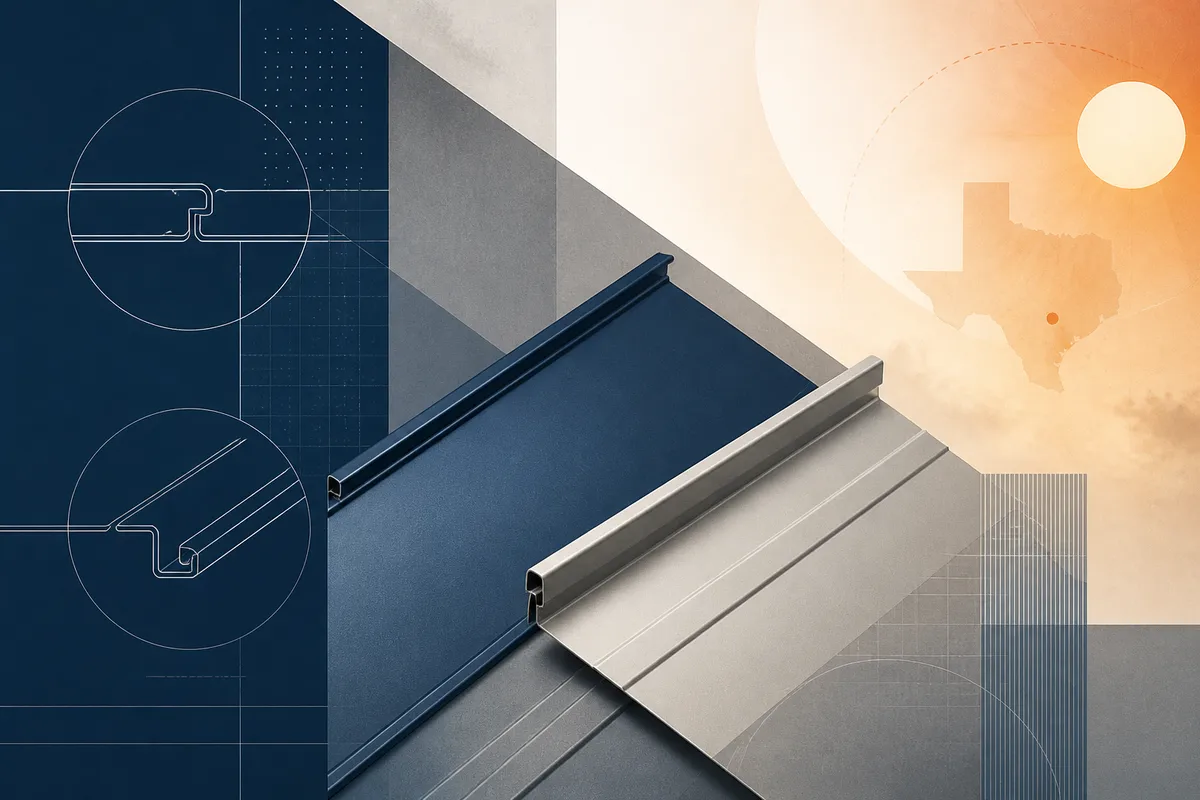
Snap-Lock vs. Mechanical Seam: Solving for Thermal Expansion in Texas Heat
In San Antonio, metal roof temperatures frequently exceed 150 degrees Fahrenheit during peak summer months. When steel is subjected to these extremes, the material physically expands; if the joining system does not account for this movement, the panels will bow, causing a visual distortion known as oil canning. While both snap-lock and mechanical seam systems fall under the standing seam category, they handle this thermal stress using entirely different mechanical principles.
This comparison breaks down the trade-offs between snap-lock and mechanical seam joints for property owners evaluating long-term performance. Choosing the wrong profile for a specific roof pitch or climate exposure leads to premature seam failure or disruptive thermal noise. Understanding these differences is the first step toward a successful shingle-to-metal conversion.
Why Thermal Expansion Causes Roof Failure
Metal roofing is a dynamic system that moves daily based on the solar load. Failure to account for this movement results in three primary issues:
- Fastener Fatigue: If panels are pinned too tightly, the force of expansion can shear concealed fasteners or widen holes.
- Structural Noise: Rapid cooling or heating causes "popping" sounds as metal rubs against the roof deck.
- Seam Separation: In extreme cases, restricted movement forces the seams to unlock or pull apart, compromising the water barrier.
The Standing Seam Selection Framework
1Evaluate the Roof Pitch Requirements
Mechanical seam panels are often required for low-slope applications where water may dwell. The seam is physically folded 90 to 180 degrees using a motorized seamer, creating a watertight seal that handles hydrostatic pressure better than a snap-together joint. For residential roofs with steeper pitches, snap-lock systems provide adequate shedding capabilities without the labor-intensive seaming process.
2Map the Thermal Movement Path
Snap-lock panels typically utilize a clip system that allows the panel to slide back and forth as it heats and cools. This is critical for long runs of metal in the Texas sun, where a single panel might expand by a fraction of an inch. Standing seam metal roofing relies on this "floating" ability to prevent the metal from buckling against its own fasteners.
3Account for Wind Uplift Pressures
In areas prone to high winds or severe storms, the mechanical bond of a seamed roof is technically superior. Because the metal is folded together, it is much harder for negative pressure to "unzip" the panels from the roof deck. Property owners must weigh this structural rigidity against the need for thermal flexibility based on their specific micro-climate.
4Mitigate Oil Canning Risk
Oil canning is the visible waviness in the flat areas of a metal panel. It is often caused by the uneven distribution of stress during thermal expansion. Snap-lock systems are generally more forgiving in residential settings because the joint is not as rigid as a mechanical seam, allowing the stress to dissipate across the panel surface rather than being locked into a fixed point.
The Mechanics of Seam Performance
The core difference lies in the concealed fastener performance during a weather event. A snap-lock profile features a male and female leg that click together; this creates a tension-based hold that is fast to install but has a ceiling for wind resistance. A mechanical seam, however, is treated as a structural component. Once the panels are laid, a machine crimps them together, essentially turning the entire roof surface into a single, unified membrane.
In the San Antonio area, the National Weather Service tracks significant climate variability, including rapid temperature drops following extreme heat. These shifts create the perfect conditions for metal fatigue. Systems that lack floating clips or have seams that are too tight for their length will eventually show signs of stress at the ridge or eave.
How Escarpment Metal Roofing helps
A standard scope of work for a standing seam installation begins with a detailed analysis of the roof's geometry and local wind load requirements. Property owners should expect a discussion on panel gauge, rib height, and the specific clip frequency required to meet local building codes. In the City of San Antonio, Development Services issues building permits for residential re-roofing projects, and ensuring the chosen system meets these standards is a prerequisite for any professional installation. A sound proposal will clearly define whether a snap-lock or mechanical seam is being used and why that choice fits the specific slope and orientation of the building.
Frequently asked questions
Does a mechanical seam roof make more noise than snap-lock?
Noise is typically a function of the underlayment and the expansion clips rather than the seam itself. However, because mechanical seams are more rigid, they can transmit vibration differently if the panels are not installed with a thermal break or proper insulation. Using a high-quality synthetic underlayment helps dampen the sound of the metal moving against the deck.
Which system is better for preventing leaks in heavy San Antonio rain?
Mechanical seams are technically more water-tight because they are physically crimped, making them the standard choice for very low-slope roofs where water moves slowly. For the typical pitch found on San Antonio homes, snap-lock systems provide excellent water shedding as long as the pitch is at least 3:12.
Can oil canning be completely avoided in high heat?
While it cannot be 100% guaranteed, using heavier gauge steel and panels with "striations" or ribs can significantly reduce the visibility of oil canning. Choosing a snap-lock profile that allows for ample thermal movement also helps prevent the stress that leads to waviness.
How does hail impact these two different seam types?
Both systems offer high impact resistance compared to traditional shingles, but the seam type itself doesn't change hail performance significantly. The gauge of the metal and the support of the roof deck beneath the panels are the primary factors in how well a roof survives a storm in hail-prone corridors.
Is a permit required for standing seam installation in San Antonio?
Yes, the City of San Antonio requires a Re-Roof Permit for most residential roofing projects. This process ensures that the installation meets current building codes, including specific requirements for wind uplift and moisture barriers.
Which system costs more to install?
Mechanical seam roofs generally require more labor and specialized equipment, such as electric seamers, which can increase the installation cost. Snap-lock systems are designed for faster assembly, making them a cost-effective standing seam option for residential projects that do not require structural-grade wind resistance.
What happens when you get in touch: you describe the situation, we ask the few questions that actually change the answer, and you get a clear scope and next step — no obligation.